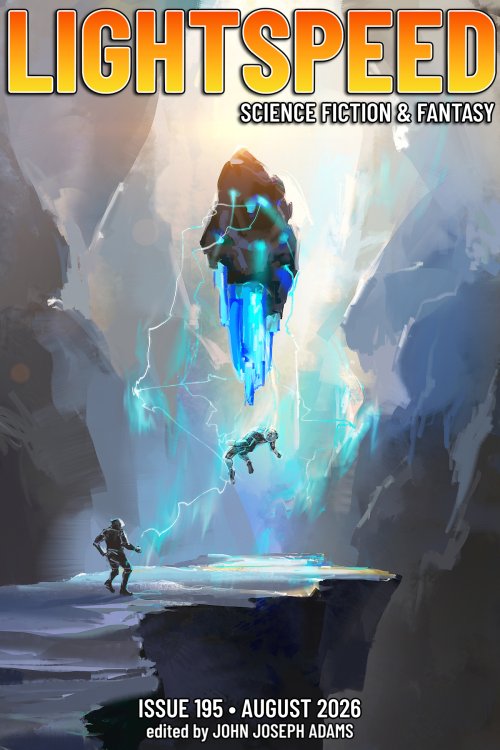
If you are reading this book then you must have either completed your might and magic training or succeeded in killing a spirit hunter and found their copy a spoil (no spirit hunter in their right mind will hand you this book under any circumstances). But whatever means you’ve acquired it, it will guide you into hunting, capturing or, in the worst case scenario, running when you come across any of these spirits.
The entries are in alphabetical order for ease of navigation. Igioromi, the first spirit hunter and author of this handbook, felt it was unfair to endanger a first-time user by not organising the names in an orderly fashion.
Below is a concise list of spirits in Yoruba mythology you might likely come across in this trade.
Note: There are three creature types, namely: dark spirits, nature spirits, and transcendental spirits. Their temperament varies depending on the spirit you encounter. So be on alert.
1. Àb’kú
These are dark spirits of the bush. The bush in this context is no ordinary bush. They come from a nameless supernatural realm overrun by bushes. This was the overgrowth that buried the path between Ọ̀rún and Àyé, after the òrìṣàs rescinded their connection with the human race. Ògún, the god of metallurgy, cleared this path with his great cutlass, after the path was first sealed by the bush, to reunite the gods with the human race. This heroic act had him receive offers from the humans who wanted him to become their king. Without saying too much—as this is no history textbook—humans were humans, and gods were gods, and the humans this time cut the connection between them and the gods since they had no use of them anymore, and the gods returned to their abode in the skies, and the path was once more buried by an overgrowth. This is where the àb’kú lives.
The àb’kú incarnate as human babies to explore the human world. It is unfortunate for any mother to be marked by the àb’kú as they will be used as a portal to the mortal realm. This will involve an almost never-ending cycle involving the birth and death of the child for as long as the àb’kú wants to return. The mother will be saddened by the losses of her child and try everything in her power to make the child stay. It is usually rare for them to succeed.
Note: It is not the job of the spirit hunter to negotiate with an àb’kú to stay with a marked mother, unless you’re determined to do so. The handbook does not cater to determination. It assumes the reader already possesses this attribute before embarking on the journey of being a spirit hunter. For details on why the àb’kú can’t be easily tamed, see Wole Soyinka’s “Àb’kú.”
2. Àgbákò
Àgbákò, also known as the Great Bane of Hunters, is the evil spirit of misfortune. A nature spirit, it has sixteen eyes encircling its head. Its legs are like palm leaves but as strong as the trunks of trees. It wears chain mail around its midriff, which contains vermin, including ticks, scorpions, and snakes (boa constrictors). It sports a thick matted hair underneath its iron helmet. The àgbákò wears a bronze coat and carries clubs and swords as though ready for war. It targets hunters and tourists who venture too deep into the bush, looking for animals to kill and resources to exploit.
Note: Do not follow the àgbákò deep into the bush. You must lure it out before attempting to capture it. Otherwise, you would make a good snack. Also, ignore rumours. The àgbákò carries no enchanting bells. That is its voice of misfortune.
3. Bàbá Àrùgbó of the Iroko Tree
Bàbá àrùgbó of the iroko tree, translated to “old man” or “old father” of the iroko tree, is a nature spirit. It haunts the forest in the shape of a little, balding gray old man with a crooked stick. It lurks with a torch in its hand and scares people, especially lumberjacks and fellers—travellers and other spirits, too. It is believed that anyone who sees his face would be driven insane to death. Spirit hunters are therefore advised to keep on hand a blindfold stored in a calabash with an ostrich’s egg for three days just in case.
Any furniture made of the iroko tree is haunted. It tends to make unsettling noises at night like the screams of restless souls. Fellers, lumberjacks, and wood makers heed to this warning. Yet, there are some who just won’t listen. These are the people bàbá àrùgbó comes for. So, spirit hunter, be careful not to fight blindly with an old man advocating against the felling of his trees.
Note: Being respectful of the old man of the forest is one way to make your spirit-hunting or escaping easy. They have a part in their hearts for those who respect their old age. Just be sure you’re going after him for the right cause.
4. Egbére
Egbére, a dark spirit, is an evil dwarf which carries around a mat. It leaves its home, the grave, at midnight, sails on its mat, and terrorises humans as well as animals until sunrise. Egbére always cries and groans, especially if its mat has been stolen. The mat of an egbére makes the new owner extremely rich if they keep it well under their beds or backyards.
A man once stole the mat of an egbére while the creature was asleep at noon. He had it in his possession for nearly a month and was almost as rich as Dangote, establishing companies in the agricultural, petroleum, entertainment, and tech sectors until the egbére found him. It haunted him for weeks, nearly turning him mad (or perhaps he did lose his mind) and took back its possession. The man lost everything in a day. For the sake of discretion, the man’s name won’t be disclosed. But he is a very popular elite.
Note: This is different from the European fairies with the tiny form and gauze-like wings. Though, some Yoruba scholars of mythology are convinced that the word translates to fairy. Also, the mat of the egbére is a valuable asset for the spirit hunter. But you have to negotiate with or get rid of the spirit before taking possession of its mat. If you’re scared of heights or cannot use it to fly, then make use of your feet or other means of transportation.
5. Emèrè
Emèrè are transcendental spirits. They are spirits that possess both dark and nature spirit characteristics. Dark spirits because of their quick temperament. Nature spirits due to their increased interest in the exploration of realms which involves navigating between worlds, time and space. However, they care less about anything but themselves and their feelings.
Due to their dual characteristics and strength, they are more powerful than witches and wizards, both classes who fear them greatly. Sadly, emèrès die when they have had enough experiences of all planes, though a few seem not to have enough. Only fifteen out of hundreds are known and only five have joined the cause of the spirit hunters to ensure the protection of the mortal world from supernatural forces. To show how dangerous these spirits are, read the account below:
“A once famous and revered spirit hunter once fell in love with one of these. He refused her marriage proposal, which was a grave mistake. His account of their breakup revealed that she dumped him in an alternate world where the people were all the same. They looked alike, talked alike, walked alike, dressed alike, and did everything alike. They even lived in the same structure and design of huts, sang the same songs, learnt and taught the same topics; had one voice, one law, one god. Even their animals all looked the same—not like that’s new. Remember the tale of how diversity came into the world? The people were just like these ones with sameness and likeness when Èṣù, the trickster god, decided to cause mischief. He promised them that if they were all different from one another they would be like Ọlọ́run, the Creator of the universe. The people believed him and went to their creator complaining of their situation in prayers every night and day until one day, Ọlọ́run listened to their pleas and caused them to be different and unique in their own ways. He made them have different cultures, social classes, occupations, age differences, sexes and genders, political ideologies, religions, and so on. The people scattered from Ife where man was first made and scattered across the globe.”
This tale recounted in the account is the history of our world. But in this world, Èṣù was judged for his mischief and thrown into Ọ̀rún Apáàd for eternity. This was the world where the emèrè dumped him. A world with a dominant monoculture. After he was found, he was admitted into Yaba Left and underwent a severe psychiatric treatment. The once rebellious spirit hunter had lost his individual spirit.
Note: Do not, again, do not under any circumstances fall in love with an emèrè. Also, if you’re not a veteran spirit hunter, do not hunt down one. Don’t let greed blind you.
6. Ẹseku
Ẹseku is a dark spirit. It is very hairy to the extent that its anus can’t be seen. Their favourite prey are children whom they abduct and harm for fun, especially disobedient children. Once a wayward child goes missing, it is usually assumed the child was kidnapped by this spirit.
Due to their small size (about two to three feet), they kill their assailants or targets by running between their legs. They possess a nigh invulnerable skin powered by juju which makes them technically bulletproof.
Note: Do not cut them. Cutting them only causes them to duplicate, which can make them impossible to subdue. Ẹseku bulletproof juju is useful for a spirit hunter in the case you encounter an àgbákò. To be acquired, only a skilled alápatà (butcher) can skin the spirit without duplicating it.
7. Ẹbọ̀rà
The ẹbọ̀rà is a ferocious dark spirit possessing multiple heads on its single neck. There are different species of the ẹbọ̀rà. There’s the hill ẹbọ̀rà that resides in only pitch-black hills, the swamp ẹbọ̀rà, and the forest ẹbọ̀rà. These forest spirits can be compared to the Scandinavian trolls in their benign or evil alignment.
Note: It is hard to distinguish between the good and the evil ẹbọ̀rà. So open your eyes. Anyone who contacts you to kill one for some naira notes, be sure to ask why. Humans might also be the problem, especially with their destructive behaviour towards the environment.
8. Ìkpàtà
The Ìkpàtà is both a dark spirit and nature spirit. They haunt lonely roads and uprooted trees. They have vines for hair, snouts for noses, beaks for lips, and they take the shape of domesticated cats. No one has seen them in years and are assumed to have gone extinct. It is believed that spirit hunters hunted every last one of them as they were the easiest hunt. So, do not bother about coming across them. But if you do, do well to capture one alive and report to The Spirit Hunters Guild for a reward. There is a need to preserve these endangered spirit species.
Note: None.
I believe this is enough information about the spirits you might come across in spirit-hunting. Read and read again to avoid missing important details about them.
Note: Do not sell or reproduce any part of this book. Use this handbook at your own discretion. In case you find it and have no intention of its use, do well to bury it deep in the earth. It will germinate and grow into a palm tree so it won’t fall in the wrong hands.
Enjoyed this story? Consider supporting us via one of the following methods: