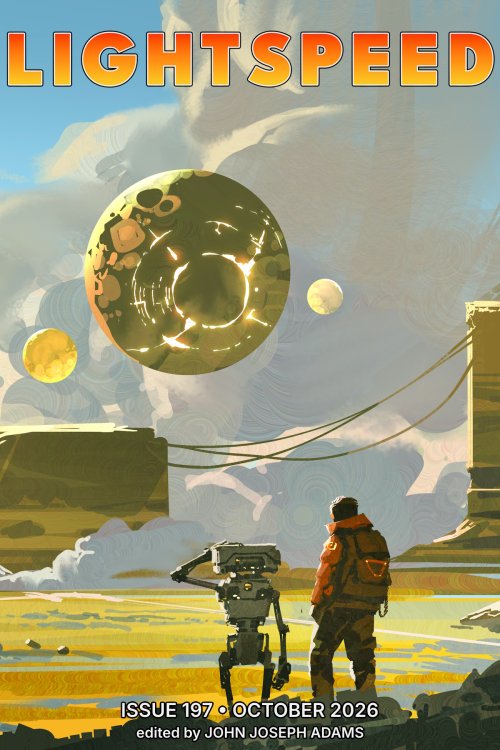
We’ll skip ahead. Say eight minutes in, so I’m not wasting your time. You’re in your chair, strapped tight, taking around eight Gs. Like this, they wouldn’t even feel that bad, all the force coming from front to back, pressing you down into your seat. Your eyes are starting to water. You might have trouble breathing. But you’re doing great. You’re looking out that window into the black of space, everything shaking. There’s some pinpricks of stars, light-years away, wobbling out there.
Say you’re a girl from Arkansas. A boy from North Dakota. A water polo star from San Bernadino. A chess champion from Portland. Maine or Oregon, doesn’t matter. Say you’re acing AP calc, say you’re barely passing biology. Say you’re you. At eight and a half minutes, that’s when your rocket hits orbit, Orion’s Belt to your right, the Little Dipper to your left, more stars you’ve ever seen twinkling away. But you didn’t go to space to look at the stars.
The rotational thrusters flare. Your chair swivels toward the wide windows. There’s about a hundred or so others with you, from all over, or all from your high school. Now you’re staring back at Earth. Look at how small it all is. Look at the seas of clouds over blue oceans. Look at mountains taller than you could dream made jagged and small. As you cross over into darkness, chasing the horizon into night, thunderheads flash, turquoise auroras dance, the eastern seaboard lights up like a spiderweb.
You try to spot your hometown, find it far harder than you imagined. Because up here, there’s no lines between states or countries. Up here, the only line is that shield around the Earth, a green, transparent shell.
Your guide tells you that’s the atmosphere. That’s the membrane that keeps all of Earth’s air packed tight, that makes the water cycle go, that protects us all from micrometeorites. It’s all of us against the black, and that green line in the darkness, that blue line in the day, is all there is between humanity and annihilation.
And as you see that darkness outside, as you really sit there, looking back at our home, the only home we’ve ever known, you are overcome. Tears float from your eyes. You aren’t the only one crying. Everyone is. Even the guide, here for his fiftieth time, cries. Your home, our home, is beautiful and fragile. Maybe, when you were younger, you went out into your backyard or into the desert and stargazed? Now you’re Earthgazing, seeing our home surrounded by blackness.
You understand. You understand in a way you never could before. We all live on Spaceship Earth, part of her crew.
When you return home, you’ll never be the same again.
Now. Take off your helmet.
• • • •
Dr. Susan Li, stiff in the navy-blue skirt suit she bought for this occasion, waits for the Chairman of the House Subcommittee on Space and Aeronautics to take off his VR helmet. NASA needs this program and its funding to work, so if she has to perform femininity to get her baby off the ground (literally), then give her the lipstick. She sits in an uncomfortable chair, her notes on the mahogany desk next to a black microphone. She stops herself from rolling up her sleeves. Can’t let the committee, all one of them who deigned to show up for her presentation, think she’s a radical, with her tattoos and her wife.
Well, Seth Rogen testified before Congress and got Alzheimer’s funding. If the star of the Green Hornet reboot could do it, she can, too.
Across from her, elevated behind an enormous wooden desk, sitting in a much more comfortable chair, is Congressman Fox, the committee’s Chairman, backed by a pair of American flags creased at right angles.
Fox removes his VR helmet, hands it to an aide. He’s an older white man in a black suit and a tie matching his political party. His hair is jet black from an obvious dye job. “Have to say, Dr. Li, that was one of the more impressive opening statements I’ve heard,” Fox says. “Do I have this correct: You trained to be an astronaut, but never made it to space?”
Reminding her of her greatest regret. What a lovely way to start. Dr. Li takes a second to collect herself. “That’s correct. There weren’t enough slots. A lot of people want to be astronauts, Mr. Fox. Right now, not a lot of people get to do it. I’d like to change that.”
Fox rubs his temple. “And would the headache I’m experiencing right now be a part of your Overview Initiative program?”
“No, Mr. Chairman. That is an unfortunate side effect of the VR headset. There would be no such effect if you were to be in an Overview capsule flight.”
“Of course. Because space flight itself is without risks, isn’t it? I’ve got a list here of possible physical dangers and negative effects of space travel.” Fox picks up a piece of paper in his liver-spotted hands. “Increased risk of cancer and heart disease. Deterioration of bone and muscle density. Loss of proprioception, which I had to look up. Possible blackouts from the increased gravity of the launch itself. Possible onset of claustrophobia from the rocket itself. The list goes on. And you want to put every eleventh grader in the country at risk?”
Dr. Li makes sure not to make a fist as she scoots closer to the microphone. “First, yes. I agree that the list of negative effects you’ve mentioned is accurate. However, if we look only at the negative effects of the program, we fail to see the positive. The experience would give every child in the country the opportunity to see Earth from orbit. This would induce the Overview Effect on each student, which would have a profound impact on our future as a nation. We don’t even need to limit the program to students! Anyone of sufficient health can get in a capsule and see Earth for themselves from outside for the same effect.”
Mr. Fox opens a manila file folder. “Yes, the Overview Effect. ‘A profound cognitive shift, characterized by a state of awe with self-transcendent qualities.’” Fox places the paper down. “You want, in essence, to brainwash a generation. A cognitive shift is quite the euphemism for a traumatic experience.”
“There are numerous studies, all in the research packet, indicating how going to space leads astronauts to stop thinking of the Earth in terms of individual countries, and instead start caring about the planet as a whole.”
“So you’ve not considered what this dissolution of mental borders would do to our society? A nation that doesn’t believe in itself is no nation at all.”
Dr. Li swallows. C’mon, be like Mr. Rogers and convince him, convince Fox with his own thinking. “I am a realist, Congressman Fox, despite the ambitions of the Overview Initiative. We are a country of people from all over, and more and more our political and social realities are becoming stratified, calcified. What if we all had one unifying experience? I’m not saying a quick jaunt up and back from orbit will fix all our problems. But when we see the Earth out there, so alone, it will bring us together. You say it would be a trauma we inflict on our young. It would be the opposite. An experience that emboldens, expands, like a first kiss or a fresh dream. If we show every one of our children the Earth, imagine what they’ll imagine.”
Fox smiles. For a moment, Dr. Li thinks she’s got him. “Now, Dr. Li, as we’ve established, you’ve never been to space. You trained to be an astronaut, but never went up.”
Dr. Li can’t stop herself. “We’re all in space right now. But for your purposes, yes, you are correct.”
“So you’re describing an effect,” Fox says, “that you have not experienced, for a result you cannot predict, at a monetary cost that is simply staggering. And there’s another factor you have not considered.”
There isn’t, but Dr. Li says, “And what would that be?” anyway.
“The environmental impact. You scientists are constantly warning about global warming, and all these rocket launches you want to do would skyrocket, pun intended, emissions globally.”
Dr. Li smiles when she wants to scream. Mr. Fox’s campaign is backed by three oil companies and a factory farm. “Do you know how the wireless headset was invented, Mr. Fox?”
“I do not.”
“The Apollo program needed a way to talk to its crew in the event they lost access to the radio console, like during Mercury 4’s landing. So they put out a call to American industry, and the wireless headset was invented. Yes, the Overview Initiative would have an environmental impact. Yes, it would be difficult. But the pursuit of it, trying it out, improving it flight after flight, would work. We would not just take the good and shrug at the bad, but we’d find a way to minimize or even eliminate rocket exhausts. It could be via a space elevator, or with an improved propellent, or maybe the creation of a zero-point energy system. I am humble enough to know I don’t have all the answers, but I know this is the right way. We need to care about each other, about our planet, and the Overview Initiative is the way to make that happen.”
“Dr. Li,” Fox says, “I’d like to thank you for your many years of service at NASA. I have two final questions for you. If we were to approve the astronomical, pun intended, cost of the Overview Initiative, would you put yourself on the list of passengers?”
“Yes,” Dr. Li says, feeling the trap close around her. “It would only make sense for the program head to participate in the program. I could hardly ask people to use a system I would be unwilling to use myself.”
“And would that fulfill your personal, lifelong dream of going to space, doing so in a way that is tied to your personal desires and removed from the taxpayer’s best interest?”
Dr. Li bites her lip. She sees Fox’s trap. She came up with something good, a real good for all mankind, and it’s going wrong. She licks her lips. She can answer his question and lose, or—
Here goes her career if she fails.
“Congressman Fox. I didn’t get to go to space not because I didn’t work hard. Not because I didn’t get the degrees, nor because I had a health problem. I didn’t go to space because we stopped dreaming. Yes, we should make changes when the shuttles exploded. Yes, we should weigh the costs of more missions. But if the Apollo era had never ended, we’d have a woman on Mars by now. We have let the billionaires dream of the stars for us. We have ceded our very sky to corporations that our taxpayer money prop up anyway.”
She has to wrangle this back. It can’t just be complaining. “We have a choice. You have a choice. We can dream again. It took sixty years to go from the Wright Brothers to the Moon. What can we do if we choose, together, to try again? Send us up. Send us up so your grandchildren and mine both know our world better than we ever did. So they can see that green line, and know how fragile all we have is. Right now, the only way to get to space for an ordinary person is the charity of a tech mogul or a spare $200,000. I don’t care if I go. Just let our children, the ones at science fairs or math competitions or poetry slams or at home, staring up at night, just give them a chance. Give them a chance to see us.” Just let all she’s done help someone else go, go to that place above and below and around all we know. Just let something she’s done matter.
“Thank you for your time, Dr. Li,” Fox says. “I admit I found your simulation impressive, though I note for the record you failed to answer my final question. No, the American people will not be funding the Overview Initiative, which would be a profound waste of resources toward a profoundly vague goal with profoundly unneeded risks. You know what a tragedy the loss of one teacher in the Challenger explosion was. Can you imagine the turmoil you would put this country through when a rocket full of high schoolers inevitably explodes? However. Maybe come back to us with a version in VR, one we can partner with an external company to sell?”
“But—” and Dr. Li realizes her microphone is off, and Fox is already leaving, unsteady on his feet. The hearing is over.
So is her dream.
• • • •
“What did you think?” I ask as I flag down a bartender.
“Well.” Champ slides onto the barstool next to me. It’s hard to see in the amber light, but she’s wearing her trademark beanie. The only times I’ve seen her without it was when we swam in the Pacific and at funerals. “You want me to be honest?”
“Always.” The bartender comes over, throws down two coasters. “Blue Moon for me.”
“I’ll take the Dark Sky IPA.” Champ clacks her black nails on the bar. We’re in Sedona, Arizona, in town for some off-road jeep rides and cowboy steaks before the conference in Phoenix this weekend, at a rooftop bar Champ picked out. Dad took me here when I was a kid. The memories of that trip have mostly faded, but I remember loving the ostrich jerky. Dad was so strong then. Now, I have to call every morning to remind him to take his insulin. “It doesn’t work, Frank.”
I hang my head. “I know.”
“Look, the VR reveal hits. The Overview Effect, very cool. But the ending sucks. Thank you.” Champ grabs her can from the bartender, cracks it open. “Dr. Li just beefs it. She’s got a great speech, and it doesn’t work.”
“Yup.” I say as much to my Blue Moon as to Champ. I squeeze in the orange slice, then grab my beer. “To publication?”
“To more publication.” Champ and I clink beers. This was supposed to be a celebration of completed drafts, but after Raphael broke up with me and Champ lost her brother, it feels like drowning our sorrows. At least she’s got a novel coming out next year. It’s good, too, an extremely depressing story about a subterranean Victorian society at war over the use of emotional control machines. “All right, so what? Should Dr. Li win, convince a stogy Republican of the value of human connection and the fragility of the universe, just like I’m trying to convince the reader? Like, of course she should win! But if she did, wouldn’t you be saying that’s too easy, typical sappy Frank writing?”
Champ puts on her hard-truths face. “I mean, yeah. No, I don’t believe our government, currently doing monstrous stuff day-in and day-out, would fund a trillion-dollar initiative to launch a bunch of teenagers into space so they can give each other zero-G hand jobs while their gym teacher croaks from a rocket-induced heart attack. And like, Fox is right. He’s a fuck, but his point about emissions is correct. Sure, you make him corrupt and sucky, but the solve for global warming isn’t dumping more wild shit into the atmosphere. Especially when you point out how fragile all this is.” Champ gestures around. Everyone else is staring up at the sky.
“Plus,” Champ continues, “if we got that money to throw around? UBI, baby. Put that money into helping unhoused people get back on their feet. Fully automated luxury communism.”
She’s right, obviously, but I hate that we can’t do both. Care for each other and dream. “You just want the cats to have jobs so humans don’t have to.”
“You’re telling me you wouldn’t be more likely to see your cardiologist if he was a cat with a stethoscope?”
I put my beer down. That cat cardiologist would want me to slow down given my dad’s recent diagnosis. Damn it. Why is there no good way to escape? “So what’s the move? Trunk this one?”
Champ shrugs. “Maybe.” On the rooftop’s railing, a man says, “That’s incredible.”
“It’s just . . . we write science fiction,” I start. “People want us to envision positive futures, right? Next Gen’s Next Gen, without the IP. Or new IP, whatever. People want hope, and they don’t find it in their political leaders, or in their communities or,” I tap my beer, “the poisons we deaden ourselves with. So where do they go for hope? Religion? I think it has to come from us. Where’s the taste for dystopia when we’re living in one? It’s so easy to extrapolate out some crap future. You do it all the time, like your story about the lavapocalypse. It’s so hard to envision the flip, you know?”
Champ snaps her fingers. “You weren’t trying to convince Fox. You were trying to convince yourself that the Overlook Initiative could work.”
She’s right, as she usually is. “I was born in ’93. Figured I could make it to 107, see the twenty-first century from start to finish if medical technology keeps improving. I never thought I’d get uploaded into a machine hive mind, or made immortal through lobster DNA or whatever. But I did think I’d get to visit the Moon. It’s not that far, you know? As a kid, they sold me a future where things kept getting better, and yeah, I’ll live a while, seventy, eighty good years, probably. But that future, with the flying cars and the racial equity and the peaceful planet? That’s as far away as the stars. So fuck it. World’s going bad, we gotta be the ones who make it better. The Overview Effect is real, the Overview Initiative is barely a science-fiction idea. It would require no new technology, and it would change people. Fuck, it changed Bill Shatner, and that guy took credit for a birthday party he didn’t throw! I’m doing the thing! Make a bright future in fiction, so that it maybe manifests in reality. And I don’t believe it. And if I don’t believe it, then Dr. Li fails.”
“It wouldn’t fix you, you know?” Champ says. “Sitting on the Moon.”
“Nothing ever does.” I sigh, think about how many more novels I’ve got in me, how many more bad relationships, how many more times I can bear to call my dad to make sure he keeps himself alive. The answer used to be as many as it took. Now I just feel tired, old, and drunk. “Onto the next story, I guess.”
“Hey.” Champ taps her can against my shoulder. “I watched some ISS live footage, though. It’s pretty good.”
“Yeah. And it’s getting dropped into the ocean by 2030. The research for this one was the best part, and the thing that made it possible won’t even last.”
Champ rolls her eyes. “You’re moping. You know who was there for me when Phil died? You, fuckhead. Couldn’t have cleaned his apartment out alone. You know why I picked this place?”
I shake my head. “No idea.”
“Look up, dipshit.”
I do. And that’s when I remember what’s special about Sedona, why all the lights are amber and pointed downward. Because, since I came here as a kid, the town transformed itself into a Dark Sky zone. Which means it’s not just the red rocks and the mountains that stun me, but above them, clearer than I’ve ever seen before, are countless stars, and more than that, between them all, a band of pale light, the Milky Way stretching across the whole of the sky.
“It ain’t Earthgazing.” Champ punches my shoulder. “But it’s pretty good.”
“Hell of a lot cheaper than Virgin Galactic.” I lean my head on her shoulders. So maybe the Overview Initiative will never be real. Maybe I’ll never sit on the Moon, and maybe Raphael will never take me back. But we can stare up at all the stars we’ll never reach.
And keep reaching.
Enjoyed this story? Consider supporting us via one of the following methods: