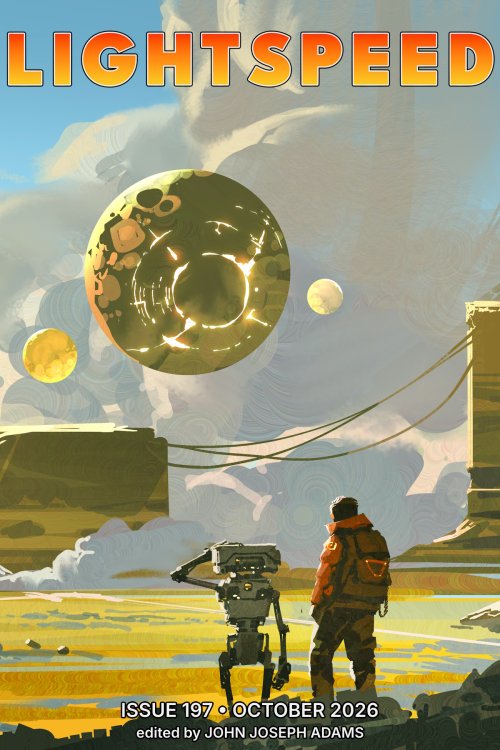
Jempo took a deep bow on the iron platform.
His body flopped forward, limbs like thick braided wire. No obvious weapons in his large and rubbery hands. Little digital eyes and a bright smile that lit the rounded ball he had for a head. More clown than competitor at first glance.
His maquinista sat a few feet out of bounds: a pale young woman, hunched on the rec center floor. Her hair a matted mess, her posture like a curved ammonite shell. This was just the quality you came across in westside neighborhood tournaments, maybe.
Ruth did her best not to laugh, out of professional respect.
She normally stayed to watch the other prelim dialectics but decided not to bother. Many in the audience had already wandered away from the bleachers. She stopped by the registration desk to confirm her third prelim win and schedule for follow-up matches. It was a little after, when she was heading to catch the city bus, that she heard it from the hallway.
Winner: Jempo.
Through the gym doors, she saw a spectator on the bleachers standing very still, like they couldn’t look away from the court.
Jempo grinned and flopped over into another bow, something glinting in his rubbery hands. His competitor, a squat club-wielding figure in armor, seemed oddly unscathed, and the other maquinista looked aghast.
Ruth wondered, in passing, what she missed in the dialectic, but not enough to look more closely.
That evening, in her apartment, she listened to the rise and fall of motor engines and the rumbling clacks of the nearby elevated train while conditioning her máquina, sharpening Galath’s blade-hands and rewiring an area on his thigh that had been battered, wiping excess fluid at the edges of Galath’s eyes. And as she did, she thought again about that strange player, Jempo, for some reason, and imagined that girl, too, the one who sat curled up on the floor, staring so carefully at every detail of the iron platform.
• • • •
The girl’s name was Aga, Ruth learned, when they matched for the first time.
The following Saturday, the tournament continued at the Matheson rec center. Like dozens of others in the apartment readying for work, Ruth got up before dawn and took the city bus to the westside. She spent the opening hour taking pieces of Galath out of her pack and assembling him. Tightening his joints, conditioning his plate metal. She checked his weight and height with the officials. He looked stern, sharp, and ready, blade-hands resting at his sides.
In the hall, outside the double doors, she saw a silver-haired man talking happily with officials. Someone from the Matheson family overseeing the event, she suspected. She tried to catch his eye, but he glided past without so much as a glance.
On the matchup boards, she saw Galath’s name, and across from it, Jempo.
The girls shook hands just before the game.
Aga’s hand, though delicate, was leathery and callused.
Ruth decided she would make this quick. She didn’t want to use too many move sets if she didn’t have to. There were a few maneuvers she hoped to keep unseen until the quarterfinals. She marched Galath to her edge of the circular raised platform. Jempo tottered to his side. Behind them, on several iron platforms across the rec center, other dialectics were underway.
At the blow of the whistle, Galath sprang forward, right blade-hand extended into a perfect stabbing point, which went through nothing but air.
Jempo was fast—much faster than Ruth had anticipated. The goofy-looking player bounced and began running away. Trying to create space and regroup, maybe, Ruth assumed. She tapped at her control bar and sent Galath chasing after him, swinging one blade, then the other, at Jempo’s back. Nothing. Nothing.
Then Jempo picked something up from the boundary of the platform, something that had been embedded within the ironwork—a thin hoop about the size of a dinner plate. Was he, was his maquinista, were they . . . ? He dashed over to another edge of the platform, and Ruth came to realize what was happening: Jempo wasn’t going to fight her máquina. He wasn’t going to fight at all.
Instead, he reached down for a second iron piece on the platform, smaller than the first; he snapped the two rings together, one inside the other, causing the inner ring to rotate slowly.
Across the way, the other girl, Aga, hunched forward, inspecting the iron platform for more embedded rings. They were never in quite the same place, since the iron platforms were designed to rotate and reconfigure between each match. The rings in the patternwork were only there because of tradition, Ruth thought. More decorative than functional. But the spinning rings in Jempo’s hands brightened, and she grew nervous.
Ruth flinched when Jempo got his large hands on a third piece, snapping it in with the others. The gyroscopic device they formed made a noise, like an almost melodic thrum, a sound she was hearing for the first time. How many were there? Five? Seven? Could he actually get them all before the end of the round?
Ruth felt herself begin to panic, something that never happened in the middle of a match. Her thoughts kept slipping from máquina to máquina to the other girl. She did not know what else to do. She let Galath loose, forgetting about holding any maneuvers back.
Just one quick tap of the control bar, and Galath extended his blade-hand beyond its seeming limit, an extra ten inches from the end of his wrist. One of his three hidden move sets. The point punctured Jempo in the back, causing a slight flutter of sparks. The strange player whirred his head and blinked twice before toppling in a heap. Jempo did not shift before the ten count, and the official blew the whistle, confirming the KO.
Winner: Galath.
• • • •
“What was that?”
Ruth marched to where the other maquinista, Aga, was bent over Jempo. The girl was using a tool set to seal the stab wound in Jempo’s back, after, it appeared, she’d already replaced damaged motor parts near the spine. She wiped blood and biomass tissue out of the wound. Jempo lay smiling in his nonoperational state.
“Sorry?” Aga did not look up from the damaged player.
“No one does the rings. You know that.”
“I do?”
“Not sure if this is a joke, but some of us are trying. You’re going to bring us down with that crap.” Ruth didn’t say fully what she meant, but she gestured to the other competitors, nearly all of whom were young or middle-aged men.
“Oh.” The maquinista pushed some of her tangled hair out of her face, her eyes not quite meeting Ruth’s. “No. It’s very much not a joke. I’m sorry if you thought that.”
The clumsy way the girl responded, the absolute lack of self-consciousness, made Ruth’s anger peter out. Aga then smiled politely, deferentially, but it was like she had to force her face to make the expression.
“Are you new?” Ruth asked. “How many pro medals do you have? Semi-pro? Any? Any at all?”
“Oh. I don’t know,” Aga answered, and it seemed genuine, like the thought never occurred to her to keep track.
“You don’t know?”
“Not exactly. Sorry. I don’t know.”
A painful silence followed. Ruth was not sure what else to say or how to continue a conversation with someone so disinterested in her own standing among the maquinistas. She grew embarrassed, on both of their behalf, and went off abruptly, trying to satisfy herself with the victory, if nothing else. But it left her with an unfinished and agitated feeling, like there were words she couldn’t remember, words that would bother her if she could not say them aloud.
• • • •
For the rest of the morning, Ruth thought about that girl, Aga, and her máquina, Jempo, despite her best efforts to focus on other things. Even during a couple of follow-up prelim rounds when she was supposed to be concentrating on the dialectic, it came to her again. The detached, almost dismissive way Aga reacted to being confronted, how unworried she was. That was what irritated Ruth the most.
She sat outside the rec center after morning rounds, eating a sandwich she had brought with her and watching a violinist performing across the street. Still in her head, Aga, Jempo. Their goofy faces, lingered.
It’s very much not a joke. I’m sorry if you thought that.
What an annoying way to put it.
“Congratulations.”
Someone intruded on Ruth’s unproductive thoughts. It was a man in a boater hat and light sport coat who waved from the rec center steps. He felt like someone she’d probably seen, hovering here and there at the tournament, maybe other tournaments, too. The thought crossed her mind that he might be someone with a contract to offer. So Ruth straightened and wiped her face, cleared her throat, and turned to engage him.
“Thank you.”
“A cut-build. I liked the move at the end. Good idea to hide range. Never want to show full capability unless you have to. I assume you’ll modify again before the later rounds.”
He sat very close. Something about the stranger smelled, not off, but heavily perfumed. Ruth couldn’t see into the lenses of his sunglasses, but she suspected he was recording with them and turned her face slightly away to avoid direct capture.
“You’re not from this neighborhood,” he asserted, without waiting for her to reply. “Eastside money. You’re hiding it. But I know the bearing.”
“I don’t know what you mean,” Ruth said coolly. “This was the only game open this month. So I came by.”
“I like it,” he replied. “It shows a willingness to travel. Pick up matches where they crop up. Pro medals. Build a record. You want to move fast. And that’s good.”
“Doesn’t everyone?”
“You’d be surprised.” The man in the boater hat turned, almost like he knew the unkempt girl, Aga, was crossing the street, Jempo bouncing alongside at her waist. She passed the performing violinist and dropped a few coins in his basket. Ruth followed the girl with her eyes.
“You’re aiming for duo matches, I take it? Then team after that?” the man asked.
“Sure. Regional circuits. Sponsors. The path.”
“The path, of course.” The man touched his beard and then his lips. “Slower ways and faster ways on the path, to be sure. Many faster, here and there, if you know the right people.”
“Yes, and many pretending to be the right people, too,” Ruth replied with some disappointment. She knew if he were someone who was going to make a firm offer of business, he’d have done it by now.
“How’s that?”
“Hucksters, grifters, whatever you prefer. Like you said, you’re hiding it well. But I know the bearing, too.” She wrapped up her things. “Got to go.”
“Ouch.” The stranger smiled, but there wasn’t anything particularly friendly in the smile. “We’ll keep talking,” he said with peculiar certainty.
Ruth picked up her pack and headed in the direction where Jempo had last bounced away.
• • • •
She told herself it was boredom, restlessness before afternoon matches, that made her think of trailing Aga and Jempo during the break. Maybe avoiding the men in the games, like the one in the boater hat. But part of her knew it was more than that, though she couldn’t explain the impulse.
The people in the little neighborhood all seemed to know Aga, from what Ruth could observe. They looked at her with familiarity and a bit of condescension. Ah, it’s that girl. That strange girl. Like everyone had a little sigh prepared, just in case they had to steel themselves to make way for her on the sidewalk or maybe take an extra second if they needed to explain something to her.
Aga, from what Ruth saw, didn’t mind or even notice. She and Jempo hurried forward, not registering the looks. She hustled into a small bar and cafe near a not-so-busy newsstand. Some man was yelling at her to move quickly for the lunch rush while she donned an apron. Jempo waddled somewhere between the front and back of house, bussing dishes. It was very odd, Ruth thought, working with her máquina that way. But Aga must have had the control bar tight in her hand and kept almost seamless simultaneous movement going between her activity and Jempo’s. The customers seemed used to it.
“Can I get a coffee?”
“One coffee. Yes, ma’am.”
It was clear from the way Aga rushed by that she didn’t even recognize Ruth from their earlier match. Ruth would normally have been offended, maybe snapped her displeasure, but she was distracted by what was going on at the tables, with Aga and Jempo. It was the way they were both moving about. And it wasn’t automated or some secondary routine in the máquina. Aga was taking orders, nodding, and moving a pen on pad with one hand, and underneath it, with the control bar, directing Jempo to wipe surfaces down and move place settings. Something about the fluidity with which the máquina and maquinista coordinated settled something for Ruth. This wasn’t some trick or wanton amateur destructively mucking things about in the games. She realized this girl, whoever she was, was quietly and steadily skilled at what she was doing. And that changed Ruth’s perception, like a crooked painting that otherwise would have bothered her had been fixed with just a slight tilt.
When Aga returned with the coffee, Ruth asked a real question—what she really wanted to understand, and it had nothing to do with pro medals or standing or anything like that. “Why the rings?” she asked. “If it’s really no joke.”
The other girl, Aga, locked eyes with her for the first time, like she had just woken and was newly aware of who she was speaking to just then. And there was a steadiness and vibrancy in the look, something unexpectedly electric, with a brightness that almost made Ruth flinch.
“Oh, it’s you,” she said.
“Yes. It’s me,” Ruth replied. She stirred sugar into the coffee but did not look at the cup. She felt she had to be serious for some reason. Like if she broke her gaze, Aga would drift away again. “I’m sorry for being . . . sharp with you, after the dialectic. You said it wasn’t a joke. You were trying to win by assembling the rings. You were going to put together the pieces. Knock Galath out with a directed pulse from the ring device instead of head-on combat, I assume. Why?”
“Oh.” Aga blinked. “It’s the way the game was meant to be played.”
“Not for a long time. Not in our lifetime. Not since the ’20s.”
“But it was the original format. Outmaneuvering to assemble the rings, using pieces of the platform. Thoughtfulness. Grace. Not cheap shots and violence. It was always meant to be a creative performance.” Aga’s hand was still moving her control bar under her tray, directing Jempo to carry a plate to another table while she spoke. “That’s the way it was done. That’s the way I want to do it.”
“It’s boring. And audiences don’t like it.”
Aga reached down for the cream on the table and looked to Ruth, who nodded slightly. She poured it and stopped. She reached for the spoon, took it gently from Ruth’s hand, and stirred.
“Some say that. When fighting became the fashion, it became the thing to say. But audiences don’t always know what they really want.”
“And you do?”
“No. I only know what I want. There’s art in there, in all of it. What it takes to move, run the platform, create, complete something before getting knocked down. It doesn’t always work. But when it works, there’s nothing else like it. The effort and complexity. It used to mean something. Not everybody wants that, but I do. I want that.”
Aga was still stirring the coffee. Ruth almost asked another question and then hesitated. Now, she stayed facing the other girl, not because she wanted to seem serious, but because the cafe around them felt more muted. It was almost as though she had a sense of what it was like in Aga’s head, where the noise of everything else had suddenly seemed turned down. There was a bubble, and if only briefly, Ruth was inside of it.
“Do you want that?” Aga asked.
Before Ruth could reply, the man in the kitchens shouted something. Aga apologized and went to the back of house. The bubble was broken, popped. Ruth sat quietly and drank her coffee. When it was time to pay, she looked at her purse and paused. She was still not used to checking how much she had on her. She’d forgotten she needed to cover bus fare back and the coffee might put her under. It was possible she could walk, but with Galath’s weight in the pack . . . She turned the coins over in her hands.
A strange smiling face, Jempo, hovered in front of her.
“You’re good,” Aga whispered as she walked by with a tray. “I took care of it.”
Ruth shifted uneasily. She finished the coffee and left quietly, murmuring a terse, “Thanks,” before slipping out the door.
• • • •
The quarterfinals were posted outside the rec center a few hours later. The top eight included Ruth and a handful of maquinistas and máquinas she had seen in the prelims, like Aga and Jempo. She and Aga were in different seeds and not matched this time, which was strangely disappointing.
Instead, Ruth’s round was against a heavy bruiser type, and it went very quickly. She moved Galath around his opponent’s back and took a deep slice at the shoulder, disabling the other máquina’s arm. Then one of the legs, before a clean hit in the middle that took him out. While the attendants cleaned up the blood, Ruth looked for Aga. The matches were staggered so that Aga’s had just finished earlier, and there weren’t many spectators at her end. Word must have gotten around that Jempo was an odd one. Yet Ruth was unsurprised when she checked the boards.
Winner: Jempo.
“Are you doing anything after this?” Aga and Jempo were waiting for Ruth outside in the dark. The streetlights were on, glass buzzing as the sun dripped away and the city cooled. That odd máquina grinned at the girl’s waist, weird little round head peering up, drops of liquid oozing around its eyes before Aga wiped them away.
Ruth was planning to head home and get some rest before the semifinals. In the distance, she saw the silver-haired man get into a black motor, too late to reach.
“You’ll be fine. I saw you. You’ll win,” Aga said casually, like she was reading something off one of the brick walls.
“Oh. Glad you think so. Feel free to let the Mathesons know.”
“Your technical precision.”
“What?”
“That’s your talent. Your technical precision. In our match, you moved very precisely. A lot of practice, rhythm. You knew exactly how far your máquina’s arm extended. You knew which move set to use when. Precision. I don’t have that. But you do. You spend a lot of time, maybe all of your time, practicing.”
“Oh.” Ruth cleared her throat. “Well, I have to, if I want to make it to the finals. For the pro medal. That will be my tenth.” Tenth medal meant bigger tournaments. Finding a partner for duo matches. And the rest. The path.
“Why?”
“Why what?”
“You asked ‘why’ about the rings, I’m asking why about that. Why do you want that?”
“Everyone does.” Ruth stopped, wondering how much more to say. She wasn’t sure if she’d said it to anyone before, let alone another maquinista. “And because I don’t have a lot of time. My family, they don’t really support this. They think this is silly entertainment. I’ve got a year, maybe, to make something of this.”
“Make what?”
“A career. I’ve got to get to the next level, or I’ve got to find something else.”
“What’s the next level?”
“Bigger dialectics. More money. Duo matches? Teams? Sponsorships? Aren’t you doing the same? You don’t want to play the same neighborhood tourneys forever, do you?”
Aga furrowed her brow, like she’d just heard something in another language and was trying to decipher it. She held nothing back in her face, and it was clear that she thought that worrying about those things was less important than the games themselves.
Then sensing, perhaps, that she was about to unintentionally trample on something someone else cared about, and seeming like someone who was used to discovering a little too late that she’d trampled on something, Aga forced a smile and then gestured at Ruth. “Anyway, well, anyway,” she strained her expressions the way she did in their first conversation, less like she did in the cafe, “maybe we should . . . let’s go.”
It could have been idle curiosity, or the months alone in the run-down apartment and not going anywhere but tournaments that were getting to her, but Ruth agreed to follow Aga and the bouncing, strange-looking máquina, through that part of the city. They went by a three-block park as the air sharpened, past a sitting guitarist for whom Aga dropped a coin. Then over a stone bridge to an area of town that looked darker and more cramped between the buildings. Ruth hesitated, but Aga seemed comfortable and unworried, guiding her to a lively street where a number of motor cars were arriving and pulling away, men and women spilling out and into various building fronts.
They went down steps into some kind of basement bar, filled with smoke and noise and heat. Ruth felt self-conscious that she wasn’t dressed for going out, but Aga waved her off and led her around bodies and toward a back corner. She grabbed Ruth’s arm and brought her next to the bar. The older women working there seemed to know Aga and nodded at her, maybe rolling their eyes slightly, like oh, there she is.
“Jempo likes the music.” Aga patted the round head of her máquina. Jempo’s digital eyes blinked and his head tilted toward the stage. Aga pointed toward Ruth’s pack, where Galath was folded up. “Who was your máquina, before?”
For as long as Ruth had been a part of the games, she’d never known anyone to talk about the máquina that way. The cadavers used to donate muscle tissue were almost always anonymous. She glanced down at Galath’s head through the opening of the bag and wiped away some liquid seeping out around his face.
“Why would I know that?”
“Sometimes people know. It can work well if the maquinista is bonded with the máquina. More meaning, I think, in what they create together. His name is Galath, right? How did you choose it?”
“I didn’t. That was the name he had when I bought him. Maybe the donor chose. I don’t really know. Did you choose the name Jempo?”
Aga nodded. “I had trouble talking when I was younger. Jempo was a garbled word I used to mispronounce. The world moves at a certain pace; he and I move at another. It felt like it fit. I think you’re going to like the music here. It’s Jempo’s favorite.”
“Hm.”
“It’s not like what we do with the máquinas. But it’s not unlike it either. You’ll see.”
The pianist on stage had been chattering with the audience and wiping his forehead under the hot stage lights. His companions on bass and drums watched his count, a-one, a-two, and away they went. The pianist’s hands bounced, erratic, syncopated, up and down the keys while the drummer rat-tatted the cymbals in quick rhythm. The bassist plucked and nodded along with the drummer and kept time, his fingers bounding up and down the neck. The energy of the pianist carried a melody up and around and down the room, the music drifting in and over the smoke.
The speed and strangeness of it reminded Ruth of something—of Jempo, during the match, the previous day. The twisty and turny manner in which he moved about the platform, it had something of that kind of spark, the way it wound about in ways that seemed surprising yet natural.
Watching the musicians, watching Jempo, watching Aga, her head nodding along, lost in the music, Ruth felt herself let go a little bit too. A relaxedness, an openness she had not felt in some time. She remembered this feeling, something from younger days, something spontaneous and unexpected she’d felt only a few times with other people, so strong that it usually went a couple of ways. She knew she could become drawn into Aga if they grew closer, wholly subsumed—or she would come to hate the other girl beyond all comprehension. That was the way these things tended to go.
“Beautiful.” Aga closed her eyes as though she felt nothing but the sounds of the room.
Outside the club, later, when they emerged into the street, Ruth thought of thanking Aga for the night off, the little break from other things that awaited the next day. She probably would have said it too, if they weren’t interrupted by a couple of people tooling along the sidewalk.
Two men approached, at first acting like they were in conversation and about to pass the young women. They had a very heavy smell, a perfumed smell, that announced their presence more than their shapes. Then one of them turned to raise a small blackjack, like he was going to take a swing at the girls. Ruth almost screamed before a large rubbery hand slapped the weapon away. It clattered into the road.
She saw Jempo bounce into one of the men, feet first. Smooth and kinetic, the máquina bounded forward then around, wheeling his body out of the way of a firm kick from the second man. Jempo twisted, and his floppy arms cracked into one of them. The first man toppled and smashed his face into the cement; blood poured from his forehead. The second man gripped Jempo around the shoulders, trying and failing to get a handle on him. But the máquina battered him in the gut, those large hands clasped like a directed ram, knocking the wind out of the man to the point where he looked very close to throwing up. Ruth had trouble seeing in the darkness in the moments after, but it looked like the man had just enough steadiness about him to reach for a knife in his coat pocket. The blade popped.
As soon as it did, Jempo’s body opened, like an animal changing posture. Ruth could not see everything from behind the máquina, but the head and chest of the máquina folded back. Something that looked almost like a limb reached out from the shell—some long thing that did not seem fully to have the edges or definition of the living, like a thickened bloodstain flowing through the air. It grabbed the man’s face and tightened.
The man slashed wildly. In the shadows, it looked like the blade got a part of the inside of Jempo, at least one slice. The máquina howled, a deep yet surreal chittering sound, and he flung the man against a nearby wall.
The man fell in a heap, went still, then began to pull at the ground, his arms and legs swimming on the cement as he tried to rise. Jempo kept advancing toward him. His companion, the first man whose forehead was pouring blood from a gash above his eyes, stumbled to grab the other one off the ground. The two men, one dragging the other, staggered back down the avenue, with Jempo following slowly in their wake until they seemed out of sight.
Aga was very still when all this happened. If she had been moving the control bar, Ruth had not even noticed.
In the distance, Jempo closed his round head and his chest, turned, and smiled at the girls, as though he had done nothing more than finish a little dance. The side of his body, under the left arm, dripped blood on the sidewalk.
• • • •
Ruth didn’t know who the men were or why they came. She assumed they were petty criminals, at first. But when Aga escorted her to the bus stop, both girls shaken by what had happened, she made a few comments about “money men.” People in the neighborhood who were always meddling with the dialectics. Some had apparently told her to take a dive in the quarterfinals. But “I don’t take requests, and they all know it,” Aga said very matter-of-factly. She thought it was possible those men were with those people, but there was no knowing for sure. “The tournaments sometimes work differently out here. You’ll see.”
And Ruth did see, the next morning, when preparing for the next match. She went straight to assembling and conditioning Galath, just as she always would, trying to focus on the ritual of the preparations. But in her mind, she kept imagining the night before, how quickly and decisively Jempo moved, the way he had overtaken those men. The frightening aggressiveness of it all. Aga apparently always had the ability to play that way, if she really wanted. She just didn’t use it on Galath in the prelims.
If they matched once more in the finals, Ruth realized, there was no guarantee Galath could handle something like that.
“Good luck to you.” She looked up, and it was the man in the boater hat and sport coat, from the other day. “I heard your next round is a player called Karkin. Cut-build like yours.”
“Yes. I’d like to prepare for that next round now, if you don’t mind.”
“I understand. You’re going to want to prepare thoroughly. He’s a big one, don’t know if you’ve seen him in the other rounds.”
“Haven’t had the opportunity, no.” Ruth pretended to be busy with the máquina.
“Interesting design. Two big claws. He almost always goes slightly over the limit at weigh-in. When that happens, they usually remove one claw to make weight.”
“Fascinating.”
“That will make it look like his right side’s open to attack. But it’s something of a show.” The man touched his beard and lips. “There’s another claw on that side, hidden. Don’t go for it.”
“Get away from me.”
“What I’m really wondering,” he continued, as though he didn’t hear her, “is who is going to make it through the other semifinal. You must be wondering that too. One of the máquinas there is standard. Tough, but conventional. The other one, a lot stranger . . . so hard to predict.” If his eyes were moving behind the dark sunglasses, she couldn’t see them. “Heard he might be injured, though.”
It wasn’t posed as a question, but Ruth could feel the question moving underneath the surface of the words. She hesitated and could not bring herself to look at the man in the boater hat. Something crept inside of her thoughts, like a strange sensation. And then she thought again of the night before. The bloodstain stretching out into the air, and the sound it made. She did not consider herself fearful, and maybe it wasn’t fear, but something like a quiet and brittle doubt. There was no way she could see the way through something like that.
Ruth touched Galath, under one of his arms, the left side, where Jempo had been bleeding at the end of the night. The man in the boater hat watched and didn’t say anything indicating that he understood.
“Break some legs.”
Ruth knew she should have called the referees over or said something to someone. Either at that time, or later at the weigh-in, when everything went just as the man had said. Karkin removed the claw, just like that. Made that side of his body open to attack, just like that. But still, she said nothing to anyone about what she knew.
The rec center was split with a giant temporary divider. The other semifinal match was on the other side. She could hear the sound of Jempo’s match but pushed it from her mind, focusing only on the iron platform in front of her, on Galath’s blade-hands poised, and Karkin shuffling on short legs across the way, vulnerable clawless side slightly tilted forward.
Waiting there, listening for the blow of the whistle, she saw next to Galath’s foot, in the iron work, a hoop-like ring, embedded. She thought briefly about the notion of picking it up, maybe another ring piece, and another, if she could maneuver Galath around the other player. It was a silly, childish thought she immediately surrendered when the dialectic began.
It was over in seven minutes.
Galath feinted toward the vulnerable side. Karkin lashed out with another weapon folded beneath his underside, the hidden claw. Galath went the other way and jammed one hand right under Karkin’s head. Another in the gut. Fluid spurted on the iron platform as the máquina pulled sideways and wobbled. Ruth tapped the control bar, again, one stab to the front. Another, to the other side. Karkin screamed. His maquinista groaned with frustration. Ruth kept him turning, shuffling, swiping with his claws. She wanted the audience to lean in, so she let one of the claws get a light hit on Galath’s shoulder. Just a little wound, to make things more interesting. Galath bled.
Karkin went for another grab and managed to slide a claw around one of Galath’s wrists. Galath’s hand broke off with an audible snap, and the crowd gasped.
Ruth directed Galath to spin around, a little influence of Jempo, maybe. A second tap of the control bar, and she used one of his three hidden move sets. Galath’s remaining arm extended, the blade stretching out thirteen inches, sliding in one unimpeded slice across Karkin’s throat. Operating fluid rained down on the iron, before his inevitable collapse.
The crowd shouted and cheered.
Ruth took it all in.
Over her shoulder, just over the divider, she could see on the ceiling a brilliant flash, and the other side of the rec center where Jempo’s match was happening went silent.
• • • •
She found Aga in the maquinista area, where players were set aside for repairs. The girl was bent over with her tool set, cauterizing and rewiring pieces of Jempo’s body. Her hair fell in her face, but she was too deep in concentration to push it away. The máquina was misshapen and dented, his head bashed in. The digital eyes there flickered in and out.
“Oh, Aga. I’m so sorry.”
Aga stemmed some bleeding in Jempo’s side with gauze. She covered one of the pockets of his abdomen and used some kind of homemade sealant around other injuries. It was a few minutes before she realized Ruth was standing there. Much as she had before, she forced herself to smile.
“He’s going to be okay.”
“Oh, that’s good. I’m so glad.”
“I’m going to need more insulation and a different size of plating to cover some of the wound. The other máquina got in there and scrambled things. Maybe opened a previous injury.”
“That’s awful. It’s terrible to lose that way, but at least he’s going to be alright. That’s what’s important.”
“Oh, we didn’t lose.” Aga cleaned blood off her tools.
“What?”
“We didn’t lose. He did it.” Aga touched Jempo’s head.
“Oh. Wow.” Ruth froze.
“The platform was bigger than it usually is, and in a configuration we’d never seen before. It took us a while to find the starter ring, then the others after that. Jempo took a few big hits. Really slowed him down. But he still managed to assemble the pieces just before he fell. The whole device, assembled, one big pulse, right into the other máquina’s face. Knocked him right out in one blast. Jempo did it.”
“That’s so . . . great.” Ruth’s stomach dropped.
“Did you win too?”
Ruth blinked. “Oh. Me? I mean—yes. Yes, we won.”
“See,” Aga said. “I knew you would.”
Ruth felt a shakiness in her chest, and she wasn’t sure if Aga was looking at her differently or if she was imagining things. The girl seemed sad, or disappointed, about something, but it could have been about Jempo’s condition. It did not seem likely that she knew what Ruth had given up to the man in the boater hat, what she had revealed.
“I guess that means, you and I, we’re up against each other in the finals.”
“I don’t think so.”
“What do you mean?”
“I think that’s enough for Jempo. I notified them that we’re withdrawing. I don’t want to push him. It’s just a tournament.” Aga took one of Jempo’s large hands in her own. “We learned a lot, and I think that’s a good note to end on. I’d rather end things right.”
“End things right. Sure.”
Ruth felt an unexpected mixture of relief and bewilderment. Part of her was glad at the other girl’s withdrawal. Part of her was distrustful, like this could be some ploy to lure her into letting down her guard. Could Aga really just walk away? Did it really mean that little to her, to pull out that late? To let Ruth win by default? She looked around the room until she found the man in the boater hat and sport coat, who was speaking to someone at the doors. They exchanged only a glance, but it communicated more than any of their conversations. He seemed satisfied with what he now knew about her, like he was reassured.
Congratulations, he mouthed with a smile.
Ruth adjusted her clothes, coughed, and looked about, turning her attention to Galath for the first time since leaving the platform, to his wrist, weeping and bloody. She’d forgotten to repair him. She moved clumsily to wrap and seal the leaking wound.
As she knelt and worked, she felt the presence of someone moving behind her and over to the other girl. From the corner of her eye, she recognized the silver-haired man, the one with the Matheson family. He introduced himself politely to Aga and seemed keen to speak with her. From what Ruth could hear, he complimented her performance, said he hadn’t seen a máquina assemble the rings in quite a few years.
“I almost couldn’t believe it, the pulse. Not going to forget it anytime soon,” the Matheson man remarked.
“Thank you,” Aga said, sounding tired.
“You’re Elling’s daughter, aren’t you?”
“Yes, I am.”
“I thought I recognized you from the neighborhood,” he said. “Hell of a musician, Elling. By far the best pianist on the westside. I used to listen to him down at June’s a lot of nights actually, though that was a long time ago.”
“Thank you. Yes, I’m still there, at June’s, all the time.”
“I was sorry to hear about him.”
“Oh. You know. Thank you,” she said.
“And I remember you, too. He’d bring you around everywhere, even to those sets. He was very protective. No one would look at his daughter sideways while he was around.”
“I know. Yes.”
“I think he would’ve loved to see you play in that dialectic. I can’t explain it. But I see him in it. I know it doesn’t make sense.”
“Thank you. No. It does make sense.” She smiled and looked at Jempo.
Ruth would remember this moment, time and again, as the years went on. How calm and at peace Aga seemed, even without having won the tournament. The prospect of failure or success had no meaningful hold over her. And Ruth would remember, so keenly, how unsettling it felt to see that, how alien and incomprehensible it was. As though Aga perceived and enjoyed some invisible layer of the world with which Ruth could not interact. That there was something that Aga could experience, maybe the Matheson man could experience, that maybe others could experience, but that Ruth could never, and maybe would never, comprehend. There was an absence Ruth could not address, no matter how many tourney wins might follow. She would remember it when they announced Aga’s withdrawal and presented the pro medal to her at the finishing ceremony, and she would remember it in the years after, when she won other tourneys, received other medals, traveled to other cities, other regions, and progressed on the path.
She would imagine Jempo’s balletic movements on the iron platform in that crummy little rec center. The off-kilter, unpredictable bounces, the swaying, sharp leaps. The girl behind him, watching the ground closely, every curve of the ironwork, studying the patterns with a small smile, with fixation and joy. And Ruth would wonder where they were, what they were doing, even as they reminded her of everything she wasn’t, of a coldness within herself that would only grow over time.
The silver-haired man finished speaking with Aga, shook her hand again, then helped her get Jempo up on his feet. The máquina tottered and limped alongside his maquinista. He stopped and looked at Ruth, his digital eyes and crooked smile flickering. Jempo flopped forward into another uneven little bow. Aga looked back only once, and it was like she also recognized the differences between them. Something she clearly felt with everyone else and thought might not be there with Ruth. But there it was. Aga waved and left Ruth to her nominal victory.
“Incredible match,” the old man said. “One of a kind.”
His eyes passed over Ruth without much regard, and he walked by her in silence.
Enjoyed this story? Consider supporting us via one of the following methods: