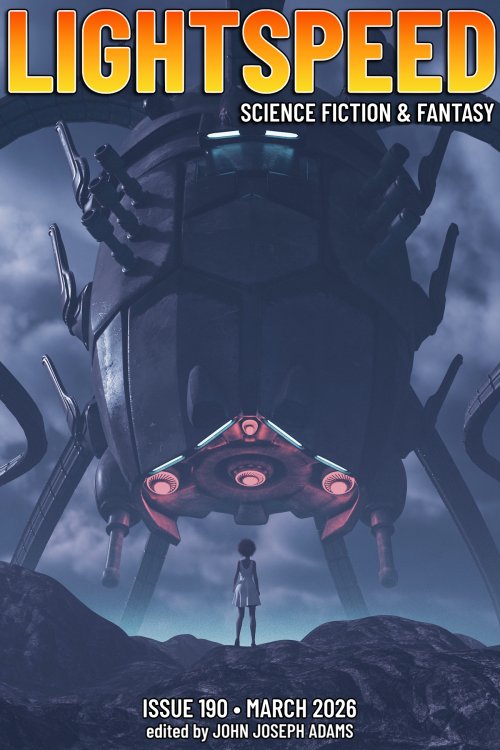
Artist Showcase
Artist Showcase: Giuliano Brocani
Giuliano Brocani is a designer and illustrator living in Italy. His portfolio and blog are at www.giulianobrocani.com. You can follow him on Twitter @notpill.
I was reading yet another article about sexual assault and the comments were dreadful. There is so much stigma, so much blame, and it all gets shifted onto the victim’s shoulders. They become scapegoats and villains, bearing all the culpability so the real villain can retain an air of false respectability. She shouldn’t have teased him, she shouldn’t have done this or worn that. Ugh. It’s an ugly truth that’s everywhere. Always. In turn, that external blame becomes internal. Why did we go out? Why did we wear that? My fault, my fault, my fault—an ever-present litany of wrongly-placed blame.
I decided to explore the idea by means of a detective story rather than a horror story for several reasons: one, because that seemed both to fit the idea and to offer a means of unpacking the larger story in a surprising way; two, because I’ve never written one of those in the short form before, and I do like a challenge (see below); and three, the notion of a recurring duo investigating crimes involving matter transmitters was very appealing.
Welcome to issue thirty-six of Lightspeed! We’ve got another great issue for you this month; read the editorial to see what we have on tap.
Most cultures want to memorialize, if not actually venerate, those who have died, and we do it mostly with cemeteries. But in an agrarian society with a limited amount of arable land like the one in my story, wasting so much valuable farmland on a graveyard makes no sense. I considered all the cultures that preserve their dead in such a way as to keep them visible and, in a way, part of the living community, and combined that with a society with an almost instinctive need to make the best use of space and resources. In that context, the role of the skull-carver made perfect sense.
It’s the worms. Giant tunnelling worms are not my terror. Tiny parasitic worms are my terror. I grew up in Idaho, surrounded by sled dogs. Worms, man. Worms. Tiny worms that get bigger as they eat you from the inside? Oh, holy. There’s something about how worms are, the way they can subdivide. Chop them up, and back they come. That’s some classic nasty.
I felt when I first read it that it was a satisfying ending. I felt it was the right ending. It’s been my guidepost for all the work I’ve done on this. There are going to be some holes. Robert Jordan told fans before he passed away that he didn’t want everything wrapped up neatly with a bow. And so there are no major cliffhangers, but there are some indications of things that happen after the series, things that continue on.
I found Audoghast while reading a book about Moslem travellers and explorers. [It] really is “forgotten”—Audoghast was a wealthy, good-sized metropolis once, but nobody’s ever yet found any trace of its ruins.
What I really had in mind while writing the story was the fiscal cliff in the news at the time. I created a scenario of perfect doom, and told the story of bickering politicians unable to reach the compromise that might save us all.
Just like the old Wizard of Oz, I wanted everything black and white, and then when she saw the faeries, a burst of color. As I was going through it the second or third time for the revisions, it occurred to me that it didn’t make much sense unless she was color-blind. Otherwise, why is she, who is really our eyes here, not seeing things in color, why is everything in black and blues and gray tones?