Author Spotlight
Author Spotlight: Ben Peek
I’ve worked some bad jobs before. I figure we all have. So it came from that, to a degree.


Advertisement
I’ve worked some bad jobs before. I figure we all have. So it came from that, to a degree.
My academic background is in psychology, and when I was trying to get this story to come together I started reading a bunch of articles on attention, working memory, language acquisition, and more generally how we learn new skills and information. As I was researching, I got it in my head that what I really wanted was to somehow train people to do something that, cognitively, we simply do not do.
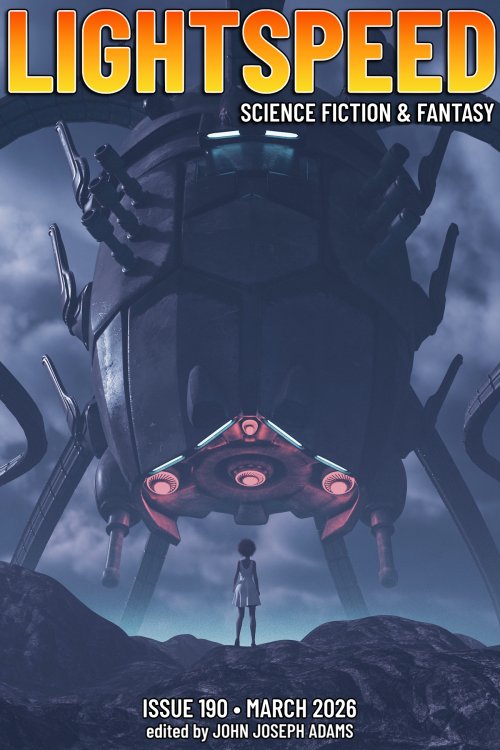
Be sure to read the editorial to get a rundown of this month’s content.
If you’re looking of a deeply imaginative story packed with wonderful characters and—yes!— engineering, Chris Kluwe’s recommends Amber Chen’s new novel Of Jade and Dragons.
Speculative fiction has a long history of engaging with aliens from other worlds. But we have fellow Earthlings all around us and research is indicating that the Western modern gaze has missed crucial things about other species: that they feel, they communicate, sometimes in such sophisticated ways (as in the case of cetaceans) that we can’t figure it out.
If you’re looking for a story wrestling with grief, death, spirits, and mythology, Aigner Loren Wilson recommends Chikọdịlị Emelụmadụ’s 2023 novel Dazzling.
For years now, I’ve been trying to work through my despair about climate catastrophe and what looks to me like the onrushing extinction both of our species and many others. How do we keep going in the face of annihilation? (Some people are more optimistic about all of this than I am, and I hope they’re right.)
Looking for a terrific anthology full of scary and thoughtful stories? Arley Sorg recommends The White Guy Dies at the End, edited by Terry J. Benton-Walker.
My stories originate from those places I don’t expect them to be born. They also come at the time I don’t want them to—like when I’m about to finally attempt an eight-hour sleep. And this story is not an exception. I have always wanted to write a story with a blend of my culture—the Yoruba culture—its myths and legends, but every attempt at this had always been unrealistic.
I was very interested in the horrifying aspects of time as a menacing, material force—something that could eat you. But I ultimately became much more interested in the world in which time might function this way: the addictive substances that might be used to pacify kids who can “see” the future.

Advertisement

Advertisement

Advertisement

Advertisement

Advertisement

Advertisement

Advertisement