In The Before Days, Tim was a fellow fabricator of dreams. He made a good living frequenting rooftop parties amid aging tech bros in fur-clad vests where mangosteen juices were mixed and silent discos reverberated within guests’ inner ears. As the dustbowl spread across the continent, even Reza himself was rumored to have purchased one of Tim’s dreamscapes—a particularly beautiful worldbuild of plummeting waterfalls and Tahitian escorts that kept Reza ensconced behind his retinas for days—after which Tim was invited to more exclusive barricaded enclaves of the super-rich, all who wanted private downloads to their next digital escape.
I wasn’t anywhere as good as Tim—hadn’t climbed the ladder to sell boutique-level dreams to movie stars or tech barons. I worked for a travel company, resurrecting drowned Venice behind the eyes of those who’d never see the city again. I sold vacations to people who didn’t leave their bedrooms, weaving Barcelona, Rome, and the French Riviera into existence after heatwaves left the real streets filled with the dead. By then, the electric grids had begun to crash, fracking spit gas from faucets, and water was scarce in half our states. It was the last good years of the planet, though we didn’t know it then, a time when delivery trucks still slinked along roads like dying millipedes, spitting boxes of survival supplies to anyone with enough funds to secure a purchase.
I’d witnessed a few of Tim’s early dreams, recognized his genius before he became famous, and I’d reached out as a fellow programmer of consciousness. We became hypernet friends, then met in person to talk about projects we were working on and reminisce over drinks about the old days when we carried screens in our pockets rather than spliced into our eyes. We shared a wistfulness for gardening; he’d begun collecting seeds since they’d been privatized, and he invited me to see the project he was working on.
I arrived to the Lower East Side on a hot June day and found an abandoned parking lot, Tim bare-chested and sweaty, swinging a sledgehammer over his head and bringing it down on a patch of blacktop.
“What you doing?” I asked.
Tim set the hammer on his shoulder and walked to the opening in the fence. “Got some black-market seeds I want to try. Come give me a hand.”
The city buzzed with daylight, the pavement radiating heat. Tim crouched and put his fingers beneath the broken asphalt. I took the other side, and we hefted it to the fence where a pile of rubble sat. He held out the sledgehammer. “Wanna give it a shot?”
Truth was, I did. It’d been decades since I’d done anything more physical than programming dreams or running for a train. I put my hands around the wood and raised it above my head, my body shaking from impact as another piece cracked off.
“See,” Tim said, “we’ll have a garden here by summer’s end.”
We cleared about ten yards by evening, the dirt below near sparkling with its earthiness. Tim got us beer from the deli across the street, and we sat against the fence drinking. The clouds were orange with the glow of night, and Tim pulled an envelope from his pocket, showed me small flecks of white the size of confetti. “Starters,” he said and handed me the tomato seeds.
What I try to remind myself is that before Tim attained Dreamweaving fame, before he abandoned the garden we built together, before the droughts and earth rips and fires, before we became Seeders and made our way across what was left of this dead land, and before he disappeared into the glowing New City with its billionaires and digital dim sum bars, he was my friend.
At least, I like to think friendship was the reason he messaged me, years after he’d become famous. By then, it was impossible not to see that the architects of flesh and wire would take everything from us. They’d turned earth into monocrops, had stolen water from the sky and life from the soil until all that was left were the borders of our skin. Then they used their labs to take what was inside. Cardiovascular systems of infomercials, vein networks of content-streaming, tongues electric with pop music, eyes blinking viral clips of thonged women lounging on the world’s most pristine beaches. They made monstrosities from flesh and machine and abandoned their nightmares in our growing wastelands: Armadillos slinking across forgotten roads with bulging circuits, cow hearts in the engines of creeper-crawlers whose bones were etched with VIN numbers as they hacked oil and limped across our highways. Tim had visited a biotech lab outside Zion and wanted to talk.
There was no sledgehammer when I saw him, just a mojito in his hand, and we shared cocktails on a Manhattan rooftop, watching waves swallow the edges of the city. Coney Island was gone, the top of its Ferris wheel peeking from the sea, and Brooklyn was flooding.
“You know we’re culpable, right?” Tim said and sipped his drink.
“For what?”
“This destruction.” He motioned to the encroaching sea and the streets below, where masked officers herded people into unmarked vans. “The protesters are right. This city might be flooding, but the rest of the country’s becoming a desert. And those vans and goons? Paid for by the very same company that employs us. They’re building their New City out there in Cali, I’ve seen it, a digital dreamworld to house the rich with two hundred thousand workers to help them grow. I’m getting out.”
“Out of what?”
He pointed to his retinals. “These eyes, New York, the fucking mess we’ve helped create.” He motioned to the vans below. “You think because we weave for the rich, we’re protected? You should hear how they talk about us. That New City’s an enormous orb like no one’s ever seen, wired up with power from remaining server farms. Dreamweavers like us are going to be shipped out to Cali to be locked in and controlled by the overlords.” Tim leaned forward. “I know a few people who can get us out. Techs who’ll remove implants and thread us back to human. There are places we can survive in the forgotten lands if you’re willing to leave.”
I knew Tim was right, what was coming was horrific. I’d seen photos of the orb being built out in California, but I convinced myself that their PR was true—they were creating a last refuge for us; they wanted to be saviors as our cities dried up and our farmland became inhospitable; they wouldn’t let us all die. But a gnawing doubt had been simmering for years. It was like when I was in college and tech went beneath our skin. How I told myself that yes, it was invasive, and sure, there were reports of infections, of eye-screen malfunctions, but this was the cost of progress. We would dream better futures now, communicate more easily, be eternally connected with the digital world that was giving us our best lives. Besides, Dreamweaving was the only way to make a living and I was about to graduate with honors. I clawed my way into the industry and was clinging to the small bit of security I’d managed to gain after a decade in the business. Can you blame me for trying to survive, became my mantra. And maybe the answer should’ve been yes.
So, what could I say when my hero told me to run?
I laughed, told him, Come on, you’re being paranoid, took an e-cab home, passing the dark vans and their victims, thinking mostly about the hopelessness that’d plagued me for decades. What do you do with a despair that leaves you wanting to scream when water turns flammable and billionaires steal aquifers to irrigate their private farmlands? I suppose you do what I did: Develop a cynicism so deep it keeps you from crying. And when protestors climbed fences to get to the gardens of the ultrarich, when seeds became privatized, when martial law was declared and people got shot, I shrugged my shoulders and said, People need to follow the law. When land became brittle as dried snakeskin, I said, What do you expect from progress? When clouds disappeared and falling ash left second-degree burns, I laughed and told colleagues, Another day in paradise. I held tight to Dreamweaving, and at parties said people need a way to enjoy themselves through hard times while I stuffed down an anguish so thick it felt like I was choking. All the while, I ignored photos of my nieces who’d grown so emaciated my sister started posting fundraisers on my eyescreens, until one day they were gone, my sister and nieces dead in Tucson from bad water, and I never mourned, never truly considered everything I was losing, had already lost, until the afternoon I returned home from drinks with Tim and found myself screaming like I’d heard others scream in distant apartments, because the world was dying with everyone with it.
That’s why I called Tim back, told him yes, I was in. Get me out of this fucking place, I said. Get me out, get me out, get me out.
• • • •
Tim saved me from certain death, of this there’s no doubt. He had his techs remove the screens from my eyes, pulled vein wiring from beneath my skin, and sewed me back to whole. We made our way to Vermont where we lived for a winter among off-gridders who had timber, a wood-burning stove, and a cellar of root veggies. You could survive in the forgotten lands okay once you’d dug up the wiring, disconnected routers, and toppled surveillance towers that fell like giant pines, but the drones could still find you. They landed on branches and spread their wings, calling Cleaning Crews to come arrest off-gridders like us. So, we stole a ride on the back of a convoy-puller, hid under its tarp-covered flatbed alongside harvested apples and pears, and jumped off near Mesa Verde, where we hitched a ride with a group of survivors.
An old woman who used to teach Pilates drove our van of nomads, crusty-lipped and dirt-caked, listening to a weathered iPod as she gazed at the canyonlands. Said she knew some Feeders running a potato farm outside Iowa City, and Tim and I spent that season digging dirt and loading convoy-pullers full of Russets to truck across the blasted lands to The New City. The farm was an approved settlement, producing sun-cultivated produce for the elite, which made it safe to squat for a while. Outside of approved settlements there were only rapture preppers armed to the teeth with semiautomatics. They maintained fortified gardens and private militia, shooting Seeders who came seeking food or water. Tim and I were happy enough on that potato farm until it went belly-up from dust storms, so we hitched a ride with another crew who’d heard of a place in Napa that produced vintage bottles for The City.
The withering vineyard was on the outskirts of civilization before the highway got chunky and The City’s lights glowed over the low hills. The winery had a patio where the owner served small plates of the kinds of things people still had a hankering for: Marinated olives that weren’t lab grown, flatbread pizzas. Tech barons would come and pay insane prices for vintage bottles, all of them eye-screened and ear-budded, drinking Merlot while scanning the drylands for Seeders like us snake-hunting for sustenance.
“Sure, you can work here seasonally,” the vintner grunted, though he didn’t expect his vineyard to last another year. “Water’s running out. Go ahead and leave your gas guzzler in the desert. Don’t need this looking like a Seeder sanctuary.”
We did—hesitantly—though the math was simple. What’d we have? A gas guzzler, a couple milk jugs of boiled water, dwindling rations. What’d the vintner have? A roof, work, food, water, and actual grapes, plump and luscious, growing in bunches on the vines.
It was mellow on the farm that spring. The vintner treated us well enough, and we trimmed grapes and made sure the irrigation system worked. We drank jug wine beneath moonlight and watched the purple glow of the metropolis’s aurora over the hills. But by harvesting season, production was down, water turning to a trickle in the pipes, and the number of bottles were withering like the grapes. The City was an octopus harvesting what was left from the soil, and when its tentacles sucked up all the water, our well dried up. We had a few barrels stockpiled alongside the house, enough to last the season, and we picked the remaining grapes, but when the vines dried out, the owner told us we were welcome to stay on the farm if we wanted, or ride with him to The City on the next convoy. “I’ll leave you the canned food in the cupboard if you’re staying,” he said, which was generous. We gazed at the horizon with its neon aura sizzling against the night sky and decided to stay.
That’s how Tim and I ended up walking the rows of desiccated vines trading Marley lyrics during the year of dustbowls and The Great Migration. By then all the grocery stores were gone along with their rows of spotted apples, packages of sickly, yellow-skinned chicken, oranges pockmarked like planets beneath the flickering lights. Tim and I were refugees among a crew of survivors, and we knew we were descendants of traitors who’d once built fabricated dreams, forfeited arable land for dust bowls, and traded hope for The New City’s sick light. We ate the raisins that were left on the vines, and when sparrows tried to steal any, we plucked their feathers and roasted their small bodies over the flames.
“We’re doomed here,” Tim said as we sat around the fire cooking the birds. “I’ll go to The City and snag some seeds.”A sack of unpatented seeds were like flecks of gold—squash, peppers, and tomatoes, the stuff of dreams—but what about water, I asked.
“We’ve only got a couple barrels left,” Sunshine confirmed. “What use are seeds without rain?”
“Guatemala’s still got rain,” Tim said, and we wanted to believe him. We’d all heard the rumors—of places where Seeders like us could start a new life. Fields of solar panels in Ecuador that hadn’t been seized, countries where survivors had taken back control. It sounded too good to be true. “I’m telling you, there’s water to be found down there. They’ll welcome us if we’re carrying seeds,” Tim promised.
Daryll, who’d escaped the Worker Mines that stretched beneath The New City’s metropolis, agreed with Tim’s plan but said he’d never step a foot close to that monstrous orb ever again. Said there was no hope trying to survive The City. “Nothing but sleep pens and fumes beneath that city. I climbed over bodies, crawled up airshafts, chewed my way through plastic fencing to sip air again, and I got these in return.” He lifted his shirt to show the scars of bullet wounds that rose like quarters along his side. He’d arrived with a folded-up napkin of squash seeds he’d managed to steal. Said the seeds were legit, but we could all see the small markings that translated to Monsanto. Poor guy was Jack and the beanstalk without the magic. We’d tried soaking them to see if they’d sprout, but they only sparked and fizzled.
So, we agreed to let Tim set off for The City and infiltrate its spinning streets, where at the heart of the metropolis, enclosed like the smallest Matryoshka doll, was an heirloom seedbank. Tim said he knew a grower who’d produced top shelf bud for micro-dispensaries, a guy who’d since been hired by The City’s billionaire consortium to breed technostrains of sativa whose smoke connected the consciousness of the rich to the hypernet. “He’ll make introductions. I’ll get the seeds, be back in a week. Then we head out,” Tim promised.
And I should’ve heard the hunger beneath his voice then, should’ve guessed how easily he’d become ensnared. I was the one who’d listened to him catalogue everything he missed—pomegranates, milkshakes, nightclubs, pills and powders of pleasure—but we were hungry and Tim promised hope. And if there was anyone capable of befriending the architects of flesh and wire to score seeds amid the holographically facelifted, Tim was our man. He’d gotten us dreaming about geodesic domes and Central American solar farms, of raising crops in black soil rather than cracked desert, of green futures and deep blue lakes, so we let him go, and just as quickly, he disappeared.
• • • •
Shortly after Tim left, a swarm of stinger-drones arrived at the vineyard, leaving welts of pop-song blisters along our arms. “Don’t scratch them,” Sunshine warned, cause she’d torn a hole on one of her bites and a baby-girl timbre leaked from her wounds, the chorus of Do Me Now, Do Me Quick echoing as we slept.
We were miserable, and it’d been a week since Tim left. There were no sacks of seeds, just the glowing city on the horizon and our dwindling water supply. We needed the haul Tim promised, but the only trace of him was a messenger pigeon that landed on the desiccated grapevines and opened its mechanical beak to speak two words in his voice. Save me, the pigeon said and spit out a scanner-band for The Great Casino. We took the band, then plucked the pigeon’s feathers and roasted the fleshy parts over the fire, knowing we were headed into the interlocking labyrinth of The City to bring our lost brother home.
To get into The City meant we had to kill a creeper-crawler. Sharma and I found an enormous beast coughing engine oil and chewing loose asphalt as it wandered the highway’s rumble strip like a lost cow. Its headlights gazed outward, its chrome exterior catching the sunlight, and I felt bad about killing it. Not that the beast would be missed—those things chew up green fields and shit out biofuel, ruining topsoil for decades—but, still, it was a living creature. We surprised this one while it was chomping on a stop sign. Sharma aimed her two-thousand-volt stun gun at its head, and it let out a moan before it dropped its fender to the ground. Riley attached wheel locks to keep it from bolting, and I popped open its enormous cavity, accessed the dashboard, and powered it down.
It was an ugly scene on the abandoned interstate as we disemboweled the creeper, its wires splayed across the asphalt. We attached our rope and hauled it back to the barn where Sonny started butchering in earnest, replacing its brain with a hybrid engine that he lowered into its hood, yanking out the surveillance system while Sharma wired up enough discarded tech to make it acceptable for the three of us. Showing up in a gas guzzler was sure to mark you as a Seeder destined for the Worker Mines, but our camouflaged creeper-crawler drove well enough and passed as a regular vehicle to get us into The City.
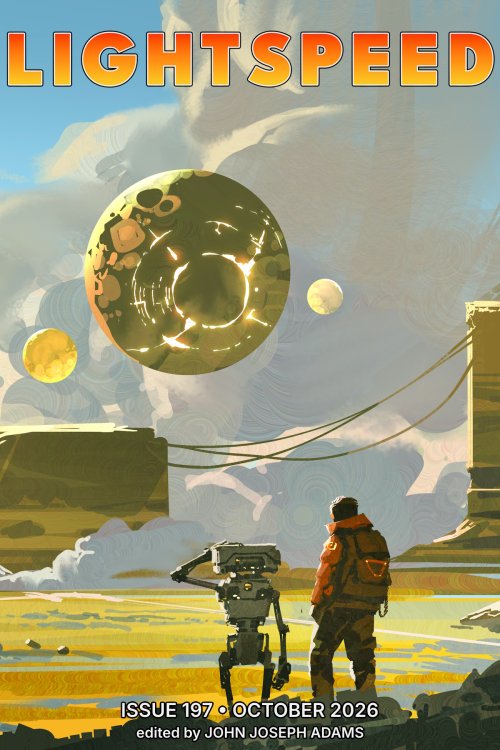
Tomás, Sharma, and I volunteered as the reconnaissance crew, and we passed over the low hills until the great orb of The New City rose on the horizon, its steel sides reflecting the cloudless sky. We all had the same reaction when we saw it, an intake of air that was part-awe, part-terror. To witness that metal orb so large it felt like a planet of its own was to have a dim recollection of a place called Epcot Center, though this was no amusement park, just a silver-sided foreboding sphere large as the sun itself with a stream of creeper-crawlers and a couple gas guzzlers flowing through its tunneled opening. Here were desperate families ready to exchange freedom for food, people dreaming of better lives though most knew they’d end up below where floors upon floors of eye-screened workers grew lab meats and brewed digital liquids for electronic teahouses and boba shops. WELCOME ALL, the sign above the entrance beamed in bright phosphorescence, and we passed through the tunnel to arrive amid the continually shifting streets of The City.
The New City was the most advanced algorithm ever built. A codex of high-rises with a rotating sphere of interlocking districts, an eternally spinning cylinder with shifting grids of restaurants, hologram halls, AR saloons, android massage parlors, cigar lounges, and crystal cafés. The architects’ dream was to have The City be a labyrinth of quicksilver and glass where new arrivals could get lost like Narcissus. Every few hours the machinery turned and a district went sliding upward as another descended. Boroughs receded deeper into the labyrinth while new districts bloomed with celebrities dining al fresco on machine-printed branzino. The algorithm constantly refreshed itself to keep everyone’s attention on new content: A dream emporium, a fiberoptic hookah bar, synth dealers, dream producers, implant doctors who replaced people’s faces with lab-grown fetal tissue and injected veins with thousand-dollar serums until you could stream concentrated data with every blink. Another implant emporium emerged from the spinning city, another tower of naked androids, another dream dealer willing to slice open the folds of your brain and let their data find the ports of gray matter while the poor were swept downward by the digital tides.
We’d lost far too many to this city. Good people who’d surrendered their beliefs and could now be found hawking micro-dreams; lost souls who became circuit-board connoisseurs; vein-wired chefs serving lab-grown charcuterie beneath rooftop bistros. Half a year ago we lost Jackie who said she missed the nightlife and ended up neurotagged at Club Morrocco. A common story for any citizens who’d survived here. They all thought they could dip in for a taste, then they were gone. The few who succeeded grew fat with age, bragging about frontal-lobe golfing to 3-D printed wives who gossip in emoji-speak and worry about the price of solar-fed steak.
We decided Sharma would trawl the franchise district for surgical supplies and antiseptic, Tomás would stay with the creeper-crawler and await our message for extraction, and since I was Tim’s friend, I’d traverse the rat’s nest to The Great Casino where rich men gambled away people’s futures. We had precisely an hour before the metropolis turned again and we were sucked into deeper districts, separated forever. All in all, it seemed like a workable plan, though I’d forgotten how seductive The City’s delights were. I passed scent-dealers at noodle shops and e-girls who offered to thread my veins with ecstasy. There were booths along the avenues encouraging me to revisit the worlds of my childhood—Manhattan before it was swallowed by the sea, Paris before it became a mass grave—and old-world taste-sellers promised me the flavor of chocolate milk, even if was nothing more than tongue-teasing data.
I turned my eyes from the delights and entered The Great Casino where men wagered the lives of laborers. At the roulette wheel, a spinning ball landed in black and children were allocated to a Worker Mine; at a poker table a man laid down his cards and collected half a dozen sweatshops; at a craps table the water rights of a starving township hung on the roll; and there, across the red velvet, lounging by a blackjack table, was Tim in citified regalia, an enhanced jacket of a thousand sequined screens advertising his many dreams.
Tim didn’t make eye contact when I sidled up next to him, merely leaned in to say, “Call me Tim and I’ll thread your veins with malware. Follow me and we’ll talk.” He led me past morphing-faced women and the men who owned them to a bank of shining elevator doors, each with their own pneumatic tubes from which men entered or emerged with e-girls on their arms. Tim scanned his wrist and the doors of a far tube opened, its elevator rocketing us high above the gaming floor into layers of steel and glass.
“Tim, what happened? We had a plan.”
“I’ve updated the plan,” he said, his eyes shining while the machinery within him hummed. The elevator doors opened to marble floors, digital waterfalls, and a dozen lounging e-girls. “No eyes,” Tim winked, and the women dissolved into pixels. He led me across the room onto a patio suspended above the city. We were one of a thousand terraces circling the great dome. Far below, City Dwellers traversed the streets, while high above at the peak of the circular city, The Seed Bank hung suspended like a space-age peach pit.
“God,” I said. “There must be enough seeds in there to—”
“Replant the entire world. In case things don’t go as planned.”
I thought of the children in the backs of migrant trucks, the emaciated corpses littering abandoned malls, the shallow graves where white bones rose like flags of surrender. Far across from where we stood, the districts were beginning to shift.
“How long until that reaches us?”
“Don’t worry, you’re safe. The casino and penthouses move together. We’ll be spun elsewhere, deeper inside. There are parks in there, paths for walking, the best gelato you’ve ever tasted.”
“Tim, we’ve got to go.”
“I thought you asked me to find seeds?” He led me inside, through a marble living room with stone vases of orchids and into a bedroom larger than the apartment where I once lived. Then he opened his wardrobe, parted the suits to reveal a scanner vault, and let his eyes deliver the code. The doors opened to an air-cooled chamber of glass canisters filled with seeds of broccoli, butternut squash, heirloom tomatoes—enough to feed an entire civilization.
“This is my stash. Every Dreamweaver collects them. Insurance in case things go bad, worthless if you don’t plant them. A rich man’s game really.”
“You stole these for us?”
“Oh, you don’t need mine. You’ll get your own.” He shut the vault and dug into his jacket for a contact case. “Take a look at my latest work, you’ll be impressed.”
I knew it was too seductive to have the digital so close to my body again, but I couldn’t help myself. I placed the two opaque screens in my eyes and Tim pulled up the sleeve of his jacket to access the controls beneath his skin. Suddenly his penthouse was gone, replaced by Venice with its extinct gondolas, a villa, and a starry night stretching beyond its windows.
“Recognize your work?” he asked. “Sampled and upgraded with new modifications.” He scrolled again and the universe splintered into districts with inhabitants buried within his Venice: Workers in line for blood orange cocktails, couples in private bubbles of joy nestling beneath sheets, everyone enjoying themselves as they sank deeper into his layers of electronic soma.
“Once we wove destinations for temporary gazers,” he said. “Now users live in virtual destinations. Digital restaurants, romantic relationships; endless dreamgirls. We’ve become multidimensional, brother. We’re dreaming across limitless planes of marketable awareness, an expansion of inner cities across every user’s interface. How many levels of subconsciousness does a mind contain? Who knows, but we’re weaving infinite dreams.”
“Jesus,” I whispered. “But you said you didn’t want—”
“Are you kidding? Of course I want it. Spend a week in this city and you’ll understand how the creators think. We’re extensions of the algorithm that’s been working through us for decades. Once it was in our devices, now it’s in us. We’re building incredible futures, we’ll live in virtual cities, our bodies limitless.” A sudden whir of machinery clicked on inside Tim, a dull whine of hyperconnectivity. I took the contacts from my eyes and handed them to him.
“We don’t have time, Tim, The City’s turning. We’re going to lose the others—the Seeders, the farm—”
“There’s no future out there,” he said as we returned to the living room. “The final change is here; we’re rewiring the body. I’ve replaced my veins with lightning cable, upgraded my heart with the world’s most powerful—”
“What do you mean upgraded your heart?”
“I’m a new being, fully automated. What little’s left that once was Tim is retrograde.”
“Tim, what’d they do with your organs?”
“Recycled them, put them in the chest of a creeper-crawler, who cares? That city out there with its shifting districts, this table, those stone vases, they’re the last vestiges of the physical world, and we’re transcending it all. The material world caused the destruction, so did our appetites for finite resources. All that will be satiated in the new worlds I’m creating. People respect me. They need me. I’m helping beta-test the future, and I can get you in.”
“What about Guatemala?”
“It’s finished. Algorithm Emperors are franchising consciousness, and the rest of humanity, the ones who can’t program, they’ll become nothing more than harvestable organs. Meanwhile, I’m eating digital caviar. Come on, brother, you don’t have to be in that group. You can weave your way to indescribable luxury, bountiful e-girls, whatever your mind can conjure.”
“And the Seeders?”
“They’re dead. This how you save yourself.”
I saw it then—the horrible vision Tim was weaving—an Earth where there was no more soil, no rains, only cracked land and a dozen spheres scattered across the globe with their own layers of digital nothingness. I saw the Seeders at the vineyard rotting like grapes, and I understood Tim was trying to save me again. The future wasn’t at all what I expected—no seedbank cracked open or fruitful bounty to plant across the hemisphere, no prospect of green paradises, no revolution—only this place where life still existed.
“Come, I’ll introduce you to a conglomerator. He’ll get you programming dreams as a starting point, arrange for your surgeries, get your physical transformation started.”
I wasn’t sure if I was choosing well. If maybe, rather than saving my friend, I was dooming us all to destruction. All I knew was when Tim turned, I followed.
The stone vase was heavy as I brought it down on the back of Tim’s head, bashing his skull again and again until I heard the crack of the machinery below. Then I dragged him to the wardrobe, tented his eyes open, and watched as the vault slid open.
• • • •
I’d imagined I was done with sorrow, that tears were as much of an anachronism as hope, but I couldn’t keep from crying as the metropolis faded into a pale glow behind us. No red and blue lights flashed in our rearview, no flocks of feather-drones on our tail, just our creeper-crawler making its way back to the vineyard. He wouldn’t leave, was all I told Sharma and Tomás. And I knew we’d abandon the farm in the morning and head toward the border. Because if we were ever to have a future, our salvation resided in planting Tim’s seeds far from the deserted States of America, past Baja and peyote country to where rain fell and trees rose high. If there was hope to be found, it was in returning this cycle to something like it once was.
Maybe I was a fool. Maybe I was a traitor. Maybe I should’ve accepted Tim’s way out. Or maybe I was listening to a wire-thin feeling threading its way through me; a dream that one day we’d find a way to recover. A future where I’d look at our crops and the rich black soil of our land and recall with horror that once upon a time, we almost let the monsters win. They were called innovators. They were called billionaires. They were called Dreamweavers, back when we believed the architects of technology were our heroes. There’s no excuse for what we did; no rationalizing to justify the destruction we created. We were stark raving mad, we were sick, we did awful things, I did awful things, but maybe, one day, I can say we got better.
Enjoyed this story? Consider supporting us via one of the following methods: