Editorial
Editorial, October 2014
Check out the Editorial for a run-down of all this month’s terrific content, and special news and announcements from our Editor.
I was in my first year of the MFA program at University of North Carolina at Greensboro, and needed to turn something in to workshop for the first time. Someone I knew had told me the story about how as a teenager, they had masturbated into Kleenex, and then had the problem of their dog wanting to eat the Kleenex. I also wanted to write about a mother with a wooden leg, and a surplus of dogs. I liked the idea of an awkward dinner.
Science fiction allows us to imagine both the best and worst of humanity. When we open our stories up to the realm of the fantastic, we bring a new creativity and freshness to the question of how to survive this twisted, complicated world with our souls intact. As a genre, science fiction hasn’t always been welcoming to different cultures and their answers to this question.
Diana Gabaldon’s Outlander series has been called “The smartest set of science fiction, adventure romances ever written by a science PhD with a background in scripting Scrooge McDuck comic books.” The series is currently being adapted for TV by Battlestar Galactica’s Ron Moore and premiered on Starz on August 9, 2014.
This interview first appeared on Wired.com’s The Geek’s Guide to the Galaxy podcast, which is hosted by David Barr Kirtley.
Sometimes ideas bubble and percolate through unknown passageways in my mind for many years before they finally find expression in a story, but in the case of “Eternal Horizon,” everything developed very quickly indeed. I was walking along a remote beach and looking out to sea and a submerged sandbank halfway to the horizon made a line of surf that looked like another horizon nearer to shore. On the way back home all the elements came together from this single observation.
“We Are the Cloud” extrapolates from the very real and interconnected systems of exploitation that I was seeing up close through my work with homeless people. The people I met at soup kitchens had aged out of foster care; the moms I met in shelters had lost kids to the foster care system. The boys I saw hanging out in Morningside Park in Harlem were the ones who got arrested and fed into the prison system by cops looking to fill their quotas;
Mary Robinette Kowal’s Glamourist series has been described as “Jane Austen with magic.” The fourth book, VALOUR AND VANITY, is out now. This interview first appeared on Wired.com’s The Geek’s Guide to the Galaxy podcast, which is hosted by David Barr Kirtley.
I like a good (i.e., unanachronistic) historical, like Patrick O’Brien’s masterful Aubrey/Maturin tales, and I read a lot of crime fiction. People who are familiar with my work will know that I’m actually a crime writer trapped in a science-fiction author’s career.
The story actually started with the rules. I’d been reading a lot of Karin Lowachee and Lois McMaster Bujold and I wanted to experiment with writing science fiction of the sort I’ve read a bunch of, but never written. As I was thinking through the story I wanted to tell, I thought of a few of the rules and wondered if I could play with them as structural markers.
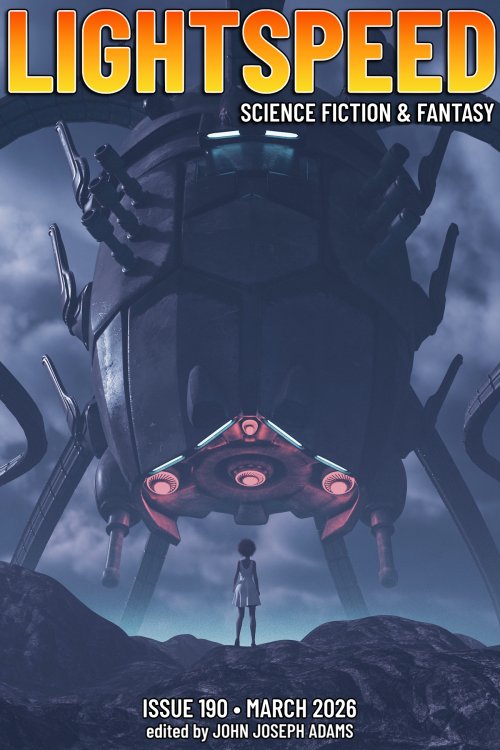
Steve Tung was born in Taipei in 1994. He studied at Fu-Hsin Trade and Art School. He is currently a freelance artist and animation student at National Yunlin University of Science and Technology. His website is www.o-fon.deviantart.com.